Core Nano-leverage

Posted an entry over on the Core77 Software & Technology blog (man is it lonely over there for a group effort). There’s something about that Victorian-style nanotechnology that brings rapid-prototyping to mind. I have to hold onto that thought.

(btw, there is a joke in the last line of that post.)

Virtual Careers and “Cyber-Accesorising”

Within the gaming community the concept of a well-known competitive game player cutting deals with sponsors isn’t new. Organizations like the Cyberathlete Professional League and names like Kornelia (the “Queen of Quake”) are already well-embedded in how many of us think of the videogame industry – it’s not just for teenagers anymore (which statistical research has already confirmed). So when BusinessWeek online starts off an article talking about how some videogame player is raking in the dough, the question running through my mind isn’t “What’s the big deal?”, it’s “When will it cease being a big deal?”

To their credit, BusinessWeek doesn’t dwell on that morsel, which to me means the word is finally getting out. That then gets us to the meat of the story: “cyber-accesorising”[sic]. From BusinessWeek’s article:

Kart Rider’s online store offers more than 100 digital items such as special $1 paint jobs and tools like 40¢ balloons that can protect a player’s car by lifting it above the track when an opponent launches a missile (90¢). The most expensive car will set you back $9.80 (it handles a bit better than one costing $1.50).

“Most of my classmates play Kart Rider, and I want to look cool in the game,” says 9-year-old Park Kun Hee, who recently bought an avatar costing $2.50, a car for $3.50, goggles for $2.50 (to see through smoke thrown off by opponents), and more. His father cut him off after he spent $150 on the digital stuff.

In case anyone isn’t following this, we’re talking volume; the very thing that made Wal*Mart the world’s 800-lb retail gorilla. So while BusinessWeek might be reporting on a company doing this today, it’d be really simple for an individual to do it in the very near future (and some already are) – especially with Sony and Microsoft building the virtual stores. Considering the volumes, I’m predicting we’ll be reading about some instant millionaire soon. Very soon.

(Does anyone remember the stories about kids running up phone bills when phone sex hit the scene? And the more recent stories about kids running up cell phone bills? Get ready for the news stories.)

Our Cheating Hearts

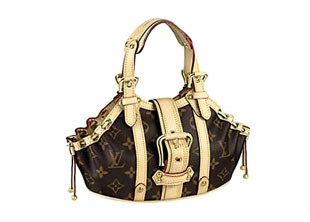
Virtual handbag using brandname

I’ve probably made at least one previous reference to the problem of design piracy. It’s an issue which resonates with me probably because I’ve seen it first-hand during trips overseas and while conducting tours through manufacturing supplier workshops where the original, patented product is sitting on a workbench and the “we make better” prototype version is being constructed on the shop table next to it – looking for all intent and purposes like the same product. To add insult to injury, there’s also a good chance the tour guide will proudly volunteer how they run the latest, greatest CAD software and then chuckle about how they bought it pre-installed on a harddrive (for some out-of-the-way places, lack of broadband makes this a nice option). That the effort is being both unofficially endorsed and officially rewarded by both Western retailers and consumers, makes the competitive landscape look less like a football field and more like a Cambodian minefield. I’m not saying it’s impossible to overcome these inequities, but I am saying it hurts small Western businesses both directly and indirectly; and like a drug addict enjoying the honeymoon of a new high, there will in my opinion come a time when the honeymoon ends and withdrawal sets in.

If I sound frustrated, I am. Not with the creative effort and process and the joy of designing, but with the nonchalant attitude of the consuming masses who somehow feel it’s their birthright to acquire everything they desire – regardless of how they acquire it or what impact their actions have on others (or themselves). And this applies across the board: from the dirty products they buy in the real world, to the hacked software and entertainment products they download on the internet. The sad part is, I think the honeymoon has yet to reach the bedroom.

What we’ve not really yet seen is the merging of tangible product with virtual 3D content. But we will. And the collision between the two worlds may turn out to be a kind of perfect storm. On the one hand are the learned attitudes and practices of the “download” culture. Add to this the “credit you deserve” and “gotta have it” mentality that leads people to purchase foreign goods which pillage the intellectual capital of their own culture while sending jobs and money to others (not realizing that these things sustain their system and their own quality of life). And on the other hand is the potential to some day download a file and fabricate the product on demand (already a possibility in some sectors, like posters and printed t-shirts). No, the quality won’t be as good initially. And no, rip-offs aren’t normally as well-made and long-lasting as pricier originals. But then since when has the consuming public shown that quality trumps price; just look at the history of Wal*Mart and how they grew to the world-consuming retailer they are today – “From the beginning, Walton had bought goods wherever he could get them cheapest, with any other considerations secondary“).

The world through my eyes – as a creator of both real and virtual product – looks like this:

>Second Life resident public comments – “Yes I violate trademarks…. My personal approach about copyright issues is this: I will break them.

>Ongoing white collar job lay-offs in the U.S. reported today – “Ford cutting 1,700 salaried positions

>Virtual products using trademarked brands (above image): SLBoutique fashion accessories

>And the reason for today’s entry courtesy of BusinessWeek blog Well Spent: – “The Cheating Culture

Again, this is not a new issue for me. Since “reBang” was started with the original intent of creating products that spanned both the virtual and real product worlds, I’ve both observed and commented on it before. I just wish that at this point I had some solid sense of whether the effort is worthwhile.

Once More Into The Breach

I’ve been following a post by Cory Ondrejka over on Terra Nova (a monster thread) which might interest a few (perhaps a very few) of you. It’s basically a re-engagement of the “Text Worlds vs 3D Worlds” … *ahem* … discussion. It’s pretty low-level stuff which, to be honest, gives me a headache; but if you have an interest – and some extra aspirin – head on over for some gnarly virtual world theoretical banter.

Taking Notice of Anime – Good and Bad

If you’ve browsed through my links list, a few of them might seem out of place (and maybe a few are). One such link is “anime news“. I’ve referred to it only once before because, while interesting, I still consider anime’s impact on industrial design to be rather low-level. However, as manufacturing and design increasingly head to Asian suppliers in the same countries where Japanese animation has been off-shored, anime’s influence on product design could grow significantly; and I mean in the sense beyond the obvious Japanimation spin-off toys (eg Pokemon, Dragonball Z, Sailor Moon, etc). One example of how this kind of influence can be transferred is this computer mouse design created by Masamune Shiro, creator of the hugely popular Ghost in the Shell. As technology liberates designers from the tyranny of manufacturing constraints, this kind of crossover can only increase; more and more artists can move beyond images into tangible, manufacturable items.

That said, this brings me to today’s BusinessWeek online article “The Anime Biz“. From the article:

What’s more, the images that roll out of Japan’s studios inspire everything from Hollywood blockbusters to high fashion. Anime “has been hugely influential,” says John Lasseter, executive vice-president and creative chief at Pixar Animation Studios… He and other foreign media execs think the role of anime could expand much, much more. “It has the potential to be Japan’s next big export,” says Todd Miller, managing director for Asia at Sony Pictures Television.

Okay, so that was rather expected and reinforces some of my reasons for keeping an eye on that industry. But what was really interesting to me as a designer are the problems and difficulties the anime industry appears to be having. Some of the issues the article raises bring to mind recent conversations I’ve had with other industrial designers – discussions revolving around designers being allowed to move into the ranks of upper corporate management. I’ve always been hesitant on that issue and some of what this article points out is why I feel that way. This part is worth noting I think:

Just as problematic is a widespread lack of business savvy. While toymakers and TV broadcasters have made billions from marketing anime characters, most studios are run by artists who rose through the ranks of animators but have little experience in management.

It’s hard to argue with observations like those made in the article (some of the deals mentioned remind me of designers willing to work with no expectation of compensation – of any form – beyond gaining experience).

Sometimes I read things expecting one kind of story, and I get something more. This is one such article. If you’re in a creative profession I think you’ll also find it worth reading.